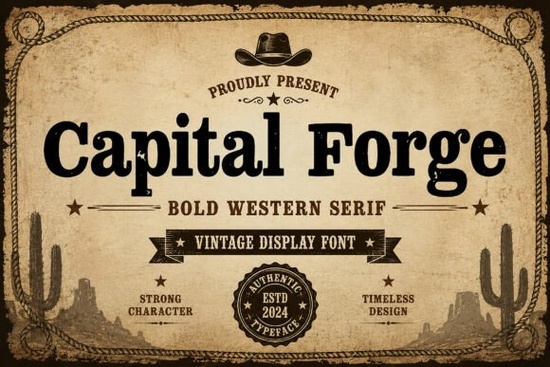
If you're looking for a bold, vintage-inspired display font that feels authentically western without leaning into cliché, Capital Forge Font is worth your attention. It’s not just another “cowboy” typeface it’s carefully shaped with strong serifs, subtle distress cues, and confident curves that nod to saloon signs, whiskey labels, and hand-stamped branding from the American frontier era. Designed for visibility and character, it works especially well when you need a logo, t-shirt design, or product label to carry weight and warmth at a glance.
Who actually uses Capital Forge and why?
Small business owners launching craft spirits brands often choose Capital Forge for bottle labels and tasting room signage because it reads clearly at small sizes and holds up beautifully in foil stamping or screen printing. Print-on-demand sellers use it for rustic apparel lines think denim jackets, bandanas, or enamel pins where a rugged but legible aesthetic matters more than ornate detail. Designers working on editorial features about regional food, outdoor gear, or heritage crafts also reach for it when they want typography that supports storytelling, not distracts from it.
Unlike some western fonts that rely heavily on exaggerated swashes or overdone texture, Capital Forge balances authenticity with usability. Its letterforms are sturdy but not stiff, and its spacing allows for comfortable reading in short headlines even on curved surfaces like mugs or tote bags.
How does it compare to other display fonts on Creative Fabrica?
If you’ve tried Donge, you’ll notice Capital Forge has less decorative flair and more grounded presence ideal when you want impact without whimsy. Heartsy leans romantic and delicate; Capital Forge is its confident, boots-on-the-ground counterpart. For projects needing mid-century energy, Retrovale offers clean geometry and retro charm, while Capital Forge brings tactile, almost physical weight. And though Tropic Sundae shares a hand-drawn quality, it’s breezy and playful where Capital Forge is warm, weathered, and quietly authoritative.
It’s also versatile across formats: works cleanly in vector-based apps like Illustrator, renders well in Canva for quick social graphics, and converts reliably for embroidery digitizing (just check your software’s kerning and spacing settings before finalizing).
What kinds of projects suit Capital Forge best?
- Branding for small-batch producers coffee roasters, hot sauce makers, leather goods studios
- Apparel and accessories especially where fabric texture or print method adds to the handmade feel
- Local event posters farmers’ markets, rodeos, music festivals with a rootsy vibe
- Editorial headers magazine spreads, zines, or blog features focused on craft, travel, or Americana
- Signage for brick-and-mortar shops wooden menu boards, chalkboard-style banners, or engraved metal plaques
One thing to keep in mind: Capital Forge shines in display use not body text. Use it for headlines, logos, or short phrases. Pair it with a neutral sans-serif (like Montserrat or Lato) or a relaxed serif (like Merriweather) for supporting copy. Avoid pairing it with other distressed or highly stylized fonts unless you’re intentionally building a layered, collage-like effect.
Where can you preview and license it?
You can test Capital Forge Font directly on Creative Fabrica, where you’ll find real-world mockups, style variations (including alternate characters and ligatures), and licensing options for personal and commercial use. The download includes OTF and TTF files, plus a PDF guide with recommended pairings and usage tips handy if you're new to western typography or working under tight deadlines.
For designers who regularly source fonts for client work, the subscription model gives access to updates and extended licenses without repurchasing. Crafters selling physical goods (like printed posters or embroidered patches) will appreciate that the standard license covers unlimited physical products as long as you’re not reselling the font file itself.
Before downloading, check whether your project needs multilingual support. Capital Forge covers basic Latin characters (A–Z, numbers, common punctuation) but doesn’t include extended diacritics or Cyrillic glyphs. If you’re designing for bilingual audiences or international markets, that’s something to verify early.
Quick checklist before using Capital Forge:
- Confirm your use case falls within the license terms (especially for POD or digital templates)
- Test legibility at your intended size especially on textured backgrounds or dark fabrics
- Try tightening tracking slightly for tighter headlines; the font naturally breathes well
- Preview how it looks alongside your secondary typeface avoid visual competition
- Save a version with outlines if sending files to printers or embroiderers
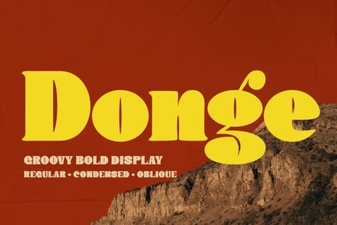 Donge Font: Elegant & Versatile Design Inspiration
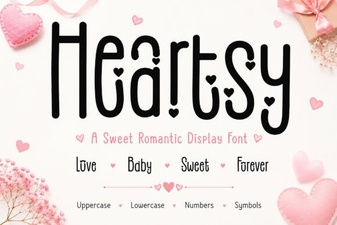 Heartsy Font: Playful & Expressive Design Tool
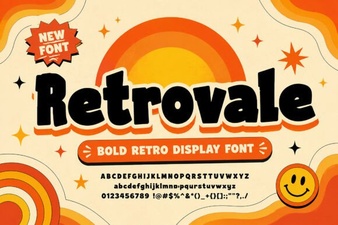 Retrovale Font: Creative Design & Project Inspiration
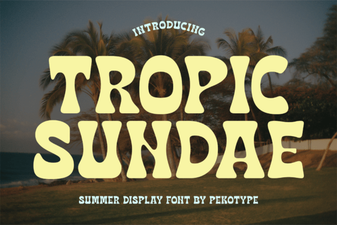 Tropic Sundae Font: Playful Design for Creative Projects
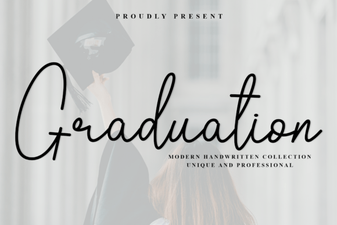 Elegant Graduation Fonts for Your Big Day
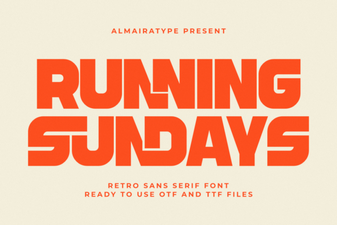 Running Sundays Font: a Playful, Dynamic Typeface for Runners