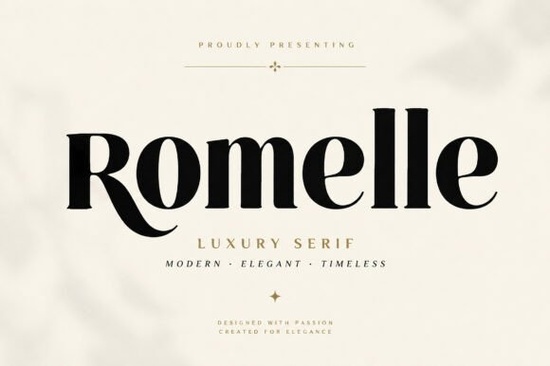
If you're looking for a serif font that feels both timeless and fresh something that works just as well on a boutique perfume bottle as it does in an Instagram story headline Romelle Font is worth your attention. It’s not overly ornate, but it’s never plain either. Designed with quiet confidence, Romelle sits comfortably between classic typography and modern editorial sensibility. You’ll notice its refined curves and sharp contrast right away not dramatic, but intentional. That balance makes it especially useful if you’re designing for luxury markets: fashion labels, beauty brands, jewelry studios, or even wedding stationery where tone and texture matter as much as legibility.
Who actually uses Romelle and why?
Small business owners launching a new skincare line often tell us they struggle to find fonts that feel premium without looking dated. Romelle solves that quietly. Its lowercase 'e' has a subtle upward flick; the uppercase 'R' carries just enough weight to anchor a logo but not so much that it overwhelms smaller packaging. Designers working on magazine spreads appreciate how its letterforms breathe on the page, especially at larger sizes. And because it includes ligatures and stylistic alternates, you can adjust tone quickly: more formal for a hotel identity, slightly softer for a handmade candle brand.
Print-on-demand sellers also report good results using Romelle for greeting cards and art prints. Its multilingual support (including extended Latin characters) means it handles names and phrases from French to Turkish without swapping fonts mid-design. And since it’s PUA encoded, you won’t lose access to alternates when copying text into Canva or Illustrator no extra setup needed.
How does Romelle compare to other serif fonts on Creative Fabrica?
It’s easy to reach for familiar options like Atlas Grove, which leans into vintage book typography with warm, rounded serifs great for cozy branding or artisanal food packaging. Or Galvore, which offers stronger geometric structure and works well for tech-adjacent luxury or minimalist architecture firms. But Romelle carves out its own space: less nostalgic than Atlas Grove, less rigid than Galvore. Think of it as the serif you choose when you want elegance that doesn’t shout.
One designer recently used Romelle alongside Romelle Font for a limited-edition lipstick launch pairing it with a clean sans-serif for body copy. The result felt cohesive, high-end, and shelf-ready. Another used it for social media templates targeting boutique hotels, adjusting kerning slightly to make headlines pop on mobile feeds without sacrificing readability.
What works and what doesn’t with Romelle?
Romelle shines in medium-to-large sizes: headlines, logos, packaging front panels, invitation suites. It’s not built for dense paragraphs or tiny captions its contrast and fine details soften at small sizes. For body text, pair it thoughtfully: a neutral sans-serif like Inter or Lato keeps things grounded.
Here’s what users consistently say works well:
- Luxury product packaging especially cosmetics, candles, and fine teas
- Fashion editorials mastheads, pull quotes, cover lines
- Wedding stationery save-the-dates, menus, foil-stamped invites
- Social media banners and story templates particularly for brands with a calm, curated aesthetic
- Boutique hotel or spa identities signage, welcome cards, digital check-in screens
Less ideal for: children’s products, loud streetwear branding, or anything requiring heavy distortion or extreme scaling. It’s designed to be seen clearly not bent, stretched, or layered aggressively.
Getting started with Romelle
Installation is straightforward on both Mac and Windows just double-click the OTF file and hit “Install.” Once loaded, Romelle appears in your font menu under its exact name (no variations or version numbers to confuse things). To access alternates and ligatures, use OpenType features in Adobe apps or compatible design tools. In Canva, you’ll need to type manually using the Character panel no auto-substitution, but full control.
A quick tip: Try setting Romelle at 36pt or larger with generous line height (1.4–1.6) for editorial layouts. For logos, test it at actual print size especially if you plan to use foil stamping or embossing. Its fine serifs hold up well, but very thin strokes may need slight thickening depending on your printer’s capabilities.
Before downloading Romelle, ask yourself:
- Do I need a serif that reads as elevated but approachable not cold or overly traditional?
- Will this be used mostly for display purposes (logos, headlines, packaging), not long-form text?
- Am I comfortable using OpenType features or happy to stick with the default character set?
- Does my project benefit from multilingual support or stylistic flexibility like ligatures?
If most of those fit, Romelle is likely a solid match. It won’t solve every typographic challenge but for the right context, it adds quiet confidence to your work.
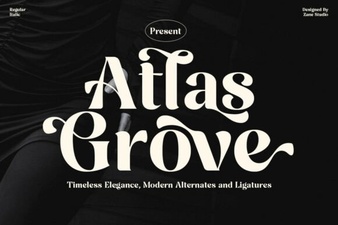 Atlas Grove Font: Elegant Design for Creative Projects
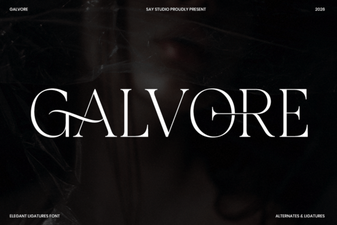 Galvore Font: Elegant & Versatile Design Tool
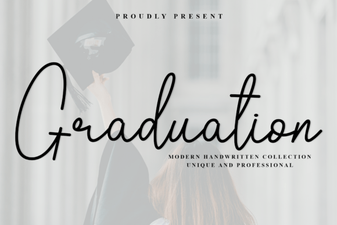 Elegant Graduation Fonts for Your Big Day
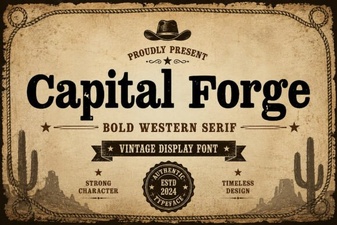 Capital Forge Font: Bold Design & Creative Projects
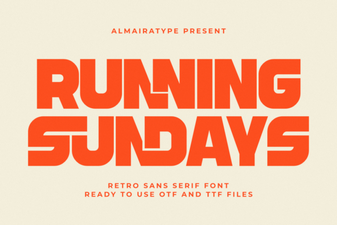 Running Sundays Font: a Playful, Dynamic Typeface for Runners
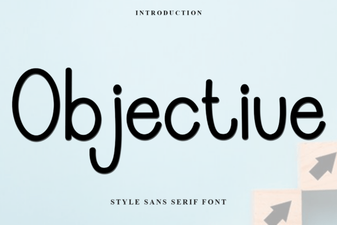 Objective Font: Clean, Versatile Design for Modern Projects